


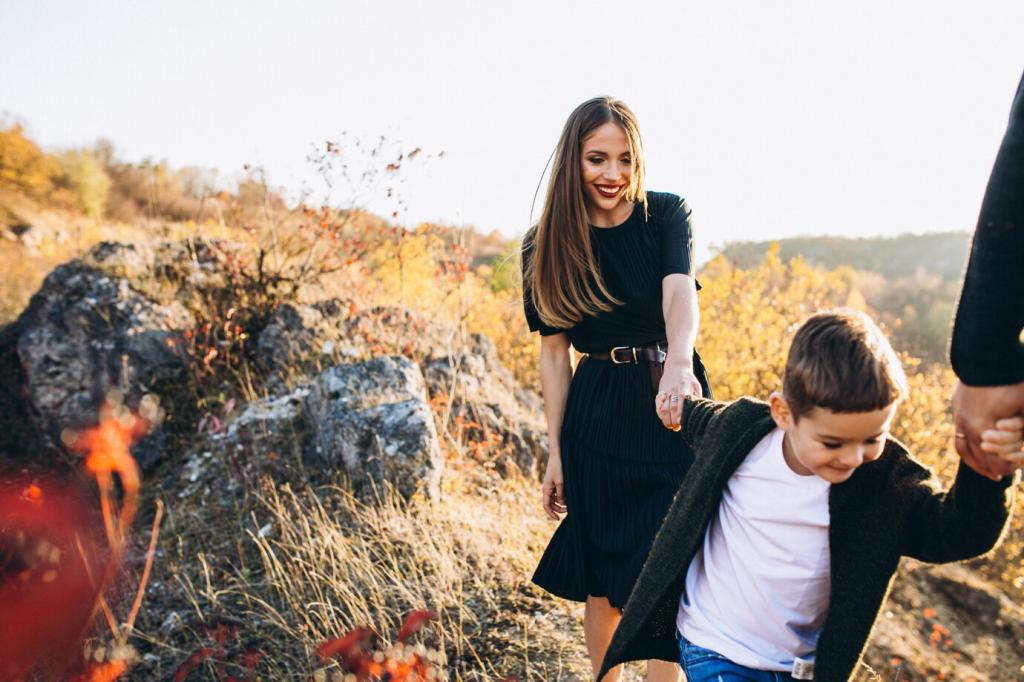
Family-Friendly Hiking Trails: Adventures Everyone Can Share

Choosing the Right Trail for All Ages

Distance, Elevation, and Time

Pick a loop under three miles with modest elevation for mixed ages. Plan for frequent pauses, snack breaks, and photo stops. One dad told us his five-year-old finished a two-mile trail by counting wooden bridges—seven in total—celebrating each crossing like a tiny summit.

Surface, Shade, and Amenities

Crushed gravel or packed dirt paths are kinder on small legs and strollers. Shade matters on warm days, as do bathrooms and picnic tables. Scan park maps for playgrounds near trailheads; a post-hike swing session often motivates even the sleepiest hikers to keep moving.

Reading Maps, Signs, and Recent Reports

Trail kiosks and park apps reveal closures, muddy sections, and wildlife sightings. Recent reviews highlight stroller-friendliness and noisy road sections. In one park, a family avoided a washed-out bridge thanks to a posted alert, turning potential tears into a detour toward a blooming meadow.
Light layers, sun hats, and child-size water bottles keep everyone happy. Bring a small first-aid kit, a whistle for each child, and high-energy snacks. A mom once packed mini chocolate chips to celebrate trail markers; the kids became enthusiastic navigators, cheering every numbered post.

Safety and Comfort Essentials

Making the Hike Fun for Kids

Try “I Spy,” color hunts, or a quiet listening challenge. Create a secret handshake at every mile marker. One grandparent taught a footstep rhythm game—“light, light, sturdy”—which helped grandkids pace uphill climbs without noticing the effort, while turning the ascent into a shared beat.

Making the Hike Fun for Kids

Bring a small notebook and crayons to sketch leaves or record bird calls. Choose sensory prompts over collecting items—describe textures, colors, and smells. A child once wrote, “The creek smells like cold pennies,” and the family now searches each hike for a scent worth naming.

This is the heading

Lorem ipsum dolor sit amet, consectetur adipiscing elit. Ut elit tellus, luctus nec ullamcorper mattis, pulvinar dapibus leo.

This is the heading

Lorem ipsum dolor sit amet, consectetur adipiscing elit. Ut elit tellus, luctus nec ullamcorper mattis, pulvinar dapibus leo.

Accessibility and Inclusivity on the Trail

Look for paved greenways with gentle grades, curb cuts, and accessible parking. Trail websites often list surface type and slope. A family celebrated a grandparent’s first post-surgery walk on a riverside promenade, proof that the right path can restore confidence and spark fresh traditions.

Accessibility and Inclusivity on the Trail

Choose quieter times, bring noise-dampening headphones, and preview photos of the route. Establish a comfort signal kids can use anytime. One parent shared how a hand squeeze paused the group for a “calm minute,” transforming potential overwhelm into a predictable, supported moment of choice.


Building Traditions and Staying Connected

Create a “first bridge” photo series for each child, or collect park passport stamps. Celebrate small steps: first mile, first bird ID, first rainy hike. Over time, these markers become a map of courage, showing kids how persistence grows like rings in a sturdy tree.

Building Traditions and Staying Connected

Many parks offer junior ranger programs with fun, educational tasks. Let kids choose a badge goal and help plan the route. A shy child once gained confidence by leading the “compass check,” announcing directions at trail junctions with a proud grin and a decisive point forward.
Mychroconcierge
Privacy Overview

This website uses cookies so that we can provide you with the best user experience possible. Cookie information is stored in your browser and performs functions such as recognising you when you return to our website and helping our team to understand which sections of the website you find most interesting and useful.